Introduction: The Miracle of Earth, Water, Hands, and Fire
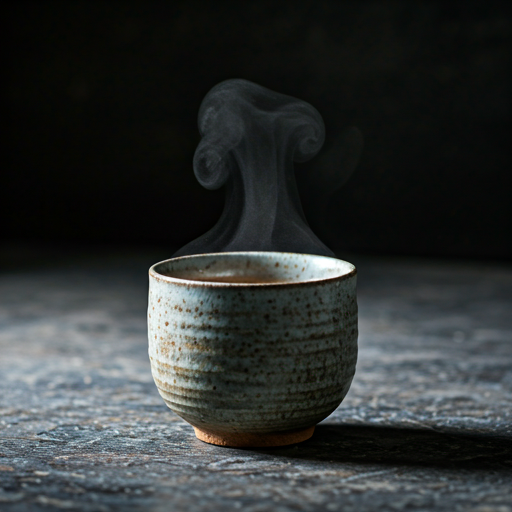
In a world increasingly dominated by mass production, automated assembly lines, and synthetic materials, there remains a profound, almost spiritual magic in the creation of authentic traditional ceramics. To hold a finished, high-quality Jian Zhan (Tenmoku) tea bowl in your hands is to hold a captured galaxy—a vessel brimming with shimmering metallic crystals, iridescent halos, and deeply textured, glassy glazes. Yet, the breathtaking beauty of these pieces completely belies their humble, utterly terrestrial origins. The journey of a Tenmoku cup does not begin in a pristine laboratory or a modern factory; it begins in the dirt. It begins with raw, unrefined mud.
The creation of an authentic Jian Zhan is a grueling, multi-step process that demands a harmonious collaboration between the artisan and the unforgiving elements of nature. It requires an intimate understanding of geology, fluid dynamics, thermodynamics, and chemistry, all guided by the intuitive touch of a master potter's hands. The techniques used today by dedicated craftsmen in Fujian Province have remained largely unchanged since the zenith of the Song Dynasty (960–1279 AD).
If you have ever watched a documentary or a masterclass on the subject, such as the visual chronicle of a Jian Zhan potter meticulously preparing raw clay from the mountain, you will immediately recognize that this is an art form defined by patience and profound physical labor. This comprehensive guide will take you step-by-step through the legendary process of creating an authentic Tenmoku tea bowl from scratch. We will explore every vital stage—from the arduous extraction of the iron-rich mountain clay, the extensive purification process, the hypnotic dance of the potter's wheel, to the final, unpredictable alchemy of the roaring kiln. By the end of this journey, you will never look at a simple tea bowl the same way again.
Step 1: Sourcing the Soul – The "Iron Tire" Clay of Jianyang
The defining characteristic of a true Jian Zhan lies not just in its spectacular glaze, but in the very bones of the vessel itself. You cannot create an authentic Tenmoku cup using standard white porcelain clay or common terracotta. The magic requires a highly specific geological ingredient: the iron-rich, red mountain clay found exclusively in the Jianyang district of Nanping, Fujian Province.
The Geology of the Jian Kilns
To truly appreciate this material, one must understand the history of Tenmoku in Jianyang, the birthplace of Jianzhan. The soil in this specific mountainous region is exceptionally high in iron oxide (ferric oxide), often containing up to 10% iron content. When fired at high temperatures, this clay transforms into a dense, dark, heavy ceramic body that the ancient Chinese poetically referred to as the "Iron Tire" (Tie Tai).
Harvesting the Mud
The process begins with the potter stepping out of the studio and into the wild. Artisans seek out specific veins of this red clay in the hillsides. The raw material is dug out of the earth in large, hard, rocky chunks. It does not look like the smooth, pliable clay you might find in an art supply store; it looks like rough, reddish-brown stone, laced with impurities, roots, and sand. Harvesting the clay is back-breaking work, but the artisan knows that the specific mineral composition of this local earth is the absolute non-negotiable foundation of their art. Without the Jianyang "Iron Tire," the glaze will not form its signature crystals, and the cup will lack the substantial weight and thermal-retaining properties required for whisking hot tea.

Step 2: Purifying the Earth – Crushing, Washing, and Sieving
Once the raw mountain clay is transported back to the pottery compound, it cannot be used immediately. It must undergo a rigorous, multi-day purification process to transform it from a rocky aggregate into a smooth, workable medium.
Crushing and Slaking
The large, hardened chunks of red clay are first physically broken down. The potter uses heavy wooden mallets or iron tools to smash the clay into smaller, manageable fragments. These fragments are then placed into massive wooden or ceramic vats and submerged in water. This process, known as slaking, allows the water to penetrate the dry clay, causing it to break down further and dissolve into a thick, muddy slurry.
The Washing and Filtering Process
The potter then uses a large wooden paddle to vigorously stir the slurry, ensuring the clay particles are fully suspended in the water. This is where the crucial purification happens. The heavy rocks, coarse sand, and organic debris sink to the bottom of the vat, while the fine, valuable clay particles remain suspended in the liquid.
This thick, reddish-brown liquid (often called slip) is then poured through a series of increasingly fine sieves or heavy cloth filters. The cloth catches all the remaining grit, leaving only the purest, microscopic clay particles to pass through into a clean receptacle. This washing and sieving process may be repeated multiple times to ensure the absolute purity of the clay. The goal is to create a medium that is incredibly smooth, yet still retains the high iron content necessary for the final firing.
De-watering and Settling
The filtered slip is far too wet to be sculpted. It is poured into large settling basins or poured over porous plaster or wooden boards to allow the excess water to slowly evaporate or drain away. Depending on the weather and humidity, this drying process can take days or even weeks. The potter must wait patiently until the mud reaches the exact consistency of a thick, pliable dough.
Step 3: Wedging and Kneading – Awakening the Clay
Even after the clay has dried to a workable consistency, it is not yet ready for the potter's wheel. It lacks structure, and more importantly, it is full of trapped air bubbles. If a piece of clay containing an air bubble is fired in a kiln at 1300°C, the air will violently expand, causing the entire cup to explode and potentially destroy other pieces in the kiln.
The Ancient Practice of Treading
For large batches of clay, some traditional Jianyang studios still employ centuries-old methods. A remarkably authentic and deeply historic practice involves using a water buffalo to tread the clay. The heavy, rhythmic stomping of the animal's hooves over a large bed of clay effectively mixes the material, compresses it, and begins to force out trapped air. This method, while increasingly rare, underscores the profound connection between this craft and traditional agrarian life.
Hand Wedging: The Spiral Knead
Whether treaded by an animal or not, the clay must ultimately be wedged by hand. The potter takes a large lump of clay and begins to knead it on a hard surface. They push, fold, and roll the clay in a repetitive, rhythmic motion, often creating a shape that looks like a spiral or a ram's head. This process, known as spiral wedging, does three crucial things: it completely eliminates any microscopic air pockets, it aligns the clay particles to make the material stronger and more elastic, and it ensures a perfectly uniform moisture content throughout the lump.
Wedging is intensely physical labor. By the time the clay is finally ready, the potter's hands are deeply stained with the red iron oxide, and the clay itself has transformed from dead mud into a vital, responsive, and "awake" material.

Step 4: Throwing on the Wheel – The Potter's Dance
With the clay perfectly prepared, the true artistry of shaping begins. The potter takes a measured ball of the dark clay and throws it firmly onto the center of the spinning potter's wheel. This is the moment where the formless mud begins its transformation into a masterpiece.
Centering the Clay
The first and most critical step in throwing is centering. As the wheel spins rapidly, the potter uses water as a lubricant and applies immense, controlled pressure with their hands to force the wobbly lump of clay into a perfectly symmetrical, spinning dome in the exact center of the wheel head. If the clay is even a millimeter off-center, the resulting cup will be lopsided and weak.
Opening and Pulling the Walls
Once centered, the potter presses their thumbs down into the middle of the dome to "open" the clay, establishing the floor of the tea bowl. Then, using a delicate pinch between their inner and outer fingers, they begin to pull the clay upwards, thinning the walls and establishing the height of the vessel.
Shaping the Classic Tenmoku Profile
A Jian Zhan is not just any bowl; it possesses a highly specific, historically mandated geometry designed specifically for the Song Dynasty practice of whisking powdered tea. The potter carefully shapes the walls into a wide, conical "V" or funnel shape. This wide surface area is essential for allowing the tea whisk to move freely and for accommodating a thick layer of white tea foam.
Near the rim, the potter creates a subtle, crucial indentation—a slight groove just below the lip. This groove serves two purposes: it makes the cup comfortable to hold, and during the firing process, it acts as a physical barrier, preventing the thick, molten iron glaze from completely running off the rim and pooling too heavily at the bottom. The mastery required to pull these walls consistently, cup after cup, is a testament to years of dedicated muscle memory. To understand the subtle differences in these historical shapes, you can explore Tenmoku vs. Jianzhan: Are They the Same Tea Cup?.
Step 5: Trimming the Foot – The Signature of Authenticity
After the cup is thrown on the wheel, it is carefully lifted off and set aside on a wooden board. It cannot be handled roughly at this stage. It must be allowed to air-dry slowly until it reaches a state known in ceramics as "leather-hard." The clay is no longer wet and sticky, but it is not yet fully dry and rigid; it holds its shape perfectly while remaining soft enough to be carved.
The Art of the Foot Ring
The leather-hard cup is placed upside-down back onto the spinning wheel and carefully re-centered. The potter then uses a sharp bamboo or metal ribbon tool to carve away the excess clay at the bottom of the bowl, shaping the foot ring.
The foot of a Jian Zhan is incredibly important. It is deliberately left unglazed, exposing the dark, coarse "Iron Tire" clay. The foot is typically carved to be sturdy, thick, and slightly chamfered. This raw, earthy base serves as a stark, beautiful contrast to the smooth, cosmic glaze of the interior. For serious collectors, examining the unglazed foot is one of the primary methods for authentication. If you are learning how to build a collection, studying this foot ring is essential knowledge for understanding how to identify fake Tenmoku cups.
Stamping the Maker's Mark
Once the foot is perfectly trimmed, the artisan will often press their personal seal or chop into the damp clay at the center of the foot ring. This stamp is the potter's signature, a proud declaration of authenticity and craftsmanship. The cups are then returned to the wooden boards and left in a well-ventilated area to dry completely (bone dry), a process that can take a week or more depending on the climate.

Step 6: Bisque Firing – Preparing for the Glaze
Bone-dry clay is incredibly fragile; it can shatter if squeezed too hard and will turn back into mud if exposed to water. Therefore, before the cups can be glazed, they must undergo a preliminary firing known as the bisque fire.
The raw cups are carefully stacked in the kiln and fired to a relatively low temperature (usually around 800°C to 900°C). This first firing fundamentally changes the chemical structure of the clay, burning out all remaining organic matter and chemically bonded water. The resulting "bisqueware" is porous, hard, and no longer soluble in water. It is now strong enough to withstand the glazing process.
Step 7: Formulating the Glaze – The Secret Iron Recipe
While the clay body forms the bones of the Jian Zhan, the glaze is its soul. The recipes used by master potters are fiercely guarded secrets, often passed down through generations. However, the fundamental chemistry remains identical to the Song Dynasty methods.
Unlike modern commercial glazes that rely on artificial chemical pigments to achieve bright colors, the authentic Jian Zhan glaze is entirely natural. It consists of only two main ingredients: local, iron-rich clay (often the exact same clay used for the body, but ground to a microscopic powder) and plant ash.
The plant ash (typically derived from burning local pine wood, bamboo, or limestone) is crucial. It acts as a flux, which significantly lowers the melting point of the silica in the clay. The color, the crystallization, the metallic spots, and the iridescent halos—everything you see in a finished Tenmoku cup—is created entirely by the behavior of the iron oxide reacting to extreme heat. It is a profound, minimalist alchemy.
Step 8: The Glazing Process – A Single, Decisive Motion
Applying the glaze to a Jian Zhan is an act of supreme confidence. The glaze mixture is suspended in a large vat of water, taking the form of a thick, dark brown soup. Because the iron-rich glaze is incredibly heavy and dense, it settles very quickly, so the artisan must constantly stir the vat to keep the materials in suspension.
The potter grasps the bisque-fired cup firmly by the carefully carved foot ring. With a swift, practiced, and highly decisive motion, they plunge the cup upside-down into the glaze vat, completely coating the interior and the upper portion of the exterior. They quickly pull it out and give it a sharp shake to remove any excess drips.
The porous bisqueware immediately absorbs the water from the glaze, leaving an incredibly thick, even layer of the raw iron/ash mixture clinging to the surface. Crucially, the potter stops the glaze line well above the foot ring. If the glaze were applied all the way to the bottom, the thick liquid glass would melt during firing, run down the sides, and fuse the cup permanently to the kiln shelf, ruining the piece.
Step 9: The Final Kiln Firing – Surrendering to the Flames
The glazed cups are loaded into the kiln for the final, transformative high-fire. This is the stage where the potter must relinquish control and surrender their artwork to the unpredictable forces of thermodynamics.
Extreme Temperatures and Phase Separation
The kiln is slowly heated to a blistering temperature of around 1300°C (2370°F). At this extreme heat, the glaze melts into a highly fluid, molten glass. Inside this liquid matrix, a phenomenon known as phase separation occurs. The heavy iron oxide molecules begin to separate from the lighter silica glass, pooling together and rising to the surface.
The Reduction Atmosphere
To create the stunning metallic effects of a Tenmoku cup, the potter must manipulate the kiln atmosphere. At the peak temperature, the artisan heavily restricts the oxygen flowing into the kiln (often by throwing in wet pine wood and sealing the dampers). This creates a severe "reduction" atmosphere. The roaring fire, desperate for oxygen, chemically strips oxygen molecules directly from the iron oxide in the molten glaze. This violent chemical reduction turns the iron from a dull brown into metallic, magnetic iron crystals.
The Cooling Curve and the Birth of the Universe
As the kiln is slowly cooled over many hours, these isolated iron particles crystallize on the surface of the glass. Depending on the exact temperature, the speed of the cooling, and the specific density of the iron, these crystals will form the delicate, flowing streaks of "Hare's Fur," the metallic, starry droplets of "Oil Spot," or—if the potter is incredibly skilled and exceptionally lucky—the glowing, iridescent, multi-colored halos of the legendary "Yohen." To truly grasp the microscopic complexity of these formations, one must examine the stunning macro photos of Tenmoku glazes.
Conclusion: From Earth to Eternity
When the kiln has finally cooled to room temperature, the potter opens the door. This is a moment of intense anticipation, as the failure rate in traditional Jian Zhan firing can be heartbreakingly high. Many cups will be blistered, dull, or fused to the shelves. But among the ashes, a few will have survived the fire, emerging as perfect, shining jewels.
The journey from a chunk of rough, red mountain mud to a finished Jian Zhan tea bowl is an epic saga of human endurance, chemical mastery, and deep respect for nature. It takes weeks of labor, years of practiced skill, and a final, uncontrollable blessing from the fire to create a single cup.
When you sit down to whisk your Matcha or pour your daily tea into an authentic Tenmoku bowl, you are not merely drinking from a piece of pottery. You are engaging with a functional masterpiece—a vessel that carries the weight of the Jianyang earth, the rhythm of the potter's wheel, and the captured, frozen energy of a 1300-degree inferno. It is a true universe born from mud, ready to elevate your daily ritual into a moment of profound, timeless beauty.