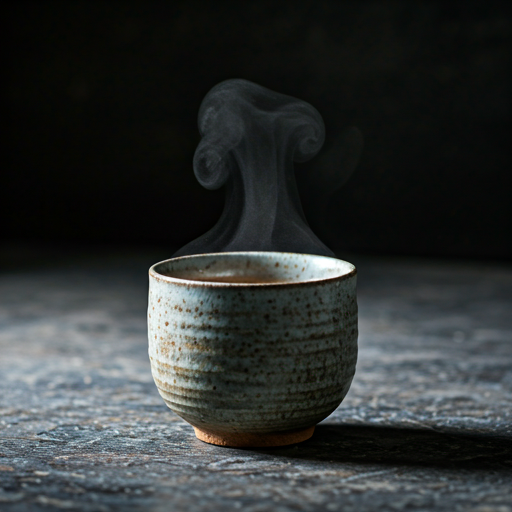
The Original Matcha Bowl: Why Your Modern Morning Routine Needs a 1,000-Year-Old Tenmoku Cup
In recent years, matcha has transcended its traditional boundaries to become a global wellness phenomenon. From bustling metropolitan coffee shops to minimalist home kitchens, the vibrant green powder has secured its place as the beverage of choice for the health-conscious and the mindful. Yet, as we enthusiastically incorporate this emerald elixir into our fast-paced modern morning routines, we often overlook the profound history of the vessel used to prepare it. Before the modern ceramic mug, and even before the rustic Japanese chawan became widely standardized, there was the Tenmoku cup—the original matcha bowl.
Also known as Jian Zhan in its Chinese homeland, the Tenmoku cup is an artifact of functional beauty with a lineage stretching back over a thousand years to the Song Dynasty. It is a piece of drinkware that was explicitly engineered for the art of whisked tea. Integrating a Tenmoku cup into your daily life is not merely a stylistic upgrade; it is a profound reclamation of a centuries-old ritual. This comprehensive guide will explore the deep historical roots of the Tenmoku bowl, the functional supremacy of its design, and why your modern morning routine desperately needs the grounding presence of a 1,000-year-old masterpiece.
The Forgotten Origins of Matcha and the Birth of Tenmoku
To understand why the Tenmoku cup is the quintessential matcha bowl, we must first travel back to the Song Dynasty (960–1279 AD) in China. While Japan is widely recognized today as the epicenter of matcha culture, the practice of whisking powdered tea originated in Song Dynasty China, an era considered the golden age of Chinese tea arts. This practice was known as Dian Cha (点茶).
The Art of Dian Cha
During the Song period, tea was not steeped from loose leaves as is common today. Instead, premium tea leaves were steamed, pressed into cakes, dried, and then meticulously ground into a fine powder. This powder was placed into a specialized bowl, hot water was added, and the mixture was vigorously whisked using a bamboo whisk until a thick, frothy foam formed on the surface. Sound familiar? This is the exact precursor to the modern Japanese tea ceremony (Chanoyu).
In the highly competitive and culturally refined atmosphere of the Song court, tea drinking was elevated to a competitive art form known as "tea tasting" or "tea contests" (Dou Cha). The ultimate goal of these contests was to produce the whitest, longest-lasting froth, and the winner was determined by whose froth clung to the sides of the bowl the longest without revealing the liquid underneath.
The Supremacy of Jian Wares
To properly judge the pure white froth of the whisked tea, the Song elites required a bowl that provided maximum visual contrast. White celadon or green porcelain bowls, which were popular in earlier dynasties, were deemed useless for this specific task. Enter Jian wares (Jian Zhan), crafted in the kilns of Jianyang, Fujian province.
Jian wares were characterized by their thick, iron-rich clay bodies and their dark, lustrous glazes—predominantly black, deep brown, or midnight blue. The dark canvas of the Jian bowl made the stark white froth of the tea pop with incredible brilliance. Emperor Huizong of Song, a renowned artist and tea aficionado, famously declared in his "Treatise on Tea" that the black-glazed tea bowls from Fujian were the absolute best vessels for whisking tea. Thus, the original matcha bowl was born out of a perfect marriage of aesthetic necessity and functional design.
The Journey to Japan: Becoming "Tenmoku"
How did the Chinese Jian Zhan become the Japanese Tenmoku? During the Southern Song Dynasty, Japanese Zen Buddhist monks traveled to the monasteries of the Tianmu Mountains (Tenmoku in Japanese) in China to study. There, they observed the local monks using these dark, heavy bowls to whisk their powdered tea to keep themselves awake during long meditation sessions.
When these Japanese monks returned home, they brought the tea seeds, the whisking techniques, and the prized dark bowls back with them. Because the bowls were sourced from the monasteries of the Tianmu Mountains, the Japanese named the vessels "Tenmoku." Even as the Japanese tea ceremony evolved over centuries to favor locally produced, asymmetrical, and rustic bowls (wabi-sabi), the authentic Chinese bowls remained highly revered. For a deeper dive into the nuances between these terms, check out our article exploring whether Tenmoku and Jianzhan are the same tea cup.
The Functional Genius of the Tenmoku Design
You might wonder if using a 1,000-year-old design is truly practical for a modern matcha routine. The truth is that the Tenmoku cup was engineered with a level of functional specificity that modern mugs simply cannot match. Every curve, the thickness of the walls, and the composition of the glaze were tailored for the perfect bowl of whisked tea.
The Perfect Funnel Shape for Whisking
Traditional Tenmoku bowls feature a distinctive conical shape. The base is relatively narrow, while the walls slope outward to a wide mouth. This "V" or "U" shape is not merely decorative; it is highly aerodynamic for the bamboo whisk (chasen).
The narrow bottom allows the small amount of matcha powder and water to pool together, making it easy for the tines of the whisk to incorporate the powder without leaving dry clumps in the corners. As you whisk vigorously in a "W" or "M" motion, the outwardly sloping walls provide ample room for the whisk to move freely, while the wide mouth gives the froth space to expand and aerate perfectly. Trying to whisk matcha in a standard cylindrical coffee mug severely restricts your wrist movement and results in a subpar, flat foam.
Thermal Mass and Heat Retention
One of the most defining characteristics of a true Tenmoku cup is its weight. Crafted from the iron-rich clay of the Wuyi Mountain region, these bowls feel substantial in the hands. This density provides incredible thermal mass.
Matcha requires precise temperature control. If the water is too hot, the tea becomes bitter; if it cools too quickly, the flavor profile remains closed, and the froth dissipates. The thick walls of a Tenmoku cup absorb the initial heat of the water, bringing it down to an optimal whisking temperature quickly, and then hold that warmth steadily for a long time. Furthermore, the thick rim ensures that the bowl never feels too hot against your lips, offering a comforting, warm embrace for your hands as you cup the bowl.
The Groove Below the Rim
Many classic Jian Zhan bowls feature a slight indentation or groove just below the outer rim. This subtle design element was intended to provide a secure grip for the fingers. When the bowl is filled with hot tea, you can rest your thumb on the rim and your fingers in the groove, ensuring a stable, burn-free hold. It is an ergonomic masterstroke from a millennium ago.
The Aesthetics of Tenmoku: A Universe in a Teacup
Beyond its functional superiority, the primary reason a Tenmoku cup will transform your morning routine is its unparalleled aesthetic beauty. The glazing techniques of Jian Zhan are renowned worldwide, creating patterns that look like capturing the cosmos within a ceramic vessel. When you pour vibrant, jade-green matcha into one of these bowls, the visual contrast is nothing short of breathtaking.
Hare’s Fur (Tu Hao)
The most iconic of the Tenmoku glazes is the Hare’s Fur pattern. As the iron-rich glaze melts at extreme temperatures (often exceeding 1300°C), it runs down the sides of the bowl, leaving fine, streaky patterns that resemble the pelt of a hare. These streaks can shimmer in shades of silver, gold, rust, or iridescent blue. Looking down into a Hare's Fur bowl filled with frothy matcha feels like looking through a lush green canopy into a starry sky.
Oil Spot (You Di)
The Oil Spot glaze features distinct, crystalline metallic spots scattered across the dark background. These spots form when iron oxide bubbles to the surface of the glaze and bursts during the firing process. The spots can catch the light and reflect silver, gold, or even holographic hues. The contrast between the rigid, metallic spots and the soft, organic green foam of the matcha creates a striking visual harmony on your breakfast table.
Partridge Feather (Zhe Gu Ban) and Yohen
Rarer still are the Partridge Feather glazes, which feature larger, mottled spots, and the legendary Yohen Tenmoku glazes. Yohen bowls exhibit an iridescent, halo-like effect around the oil spots, creating a three-dimensional illusion of deep space. There are only a handful of intact, antique Yohen Tenmoku bowls left in the world, all preserved in Japan as National Treasures. However, modern master potters have successfully recreated these stunning effects, allowing you to hold a galaxy in your hands every morning.
Why Your Modern Morning Routine Needs a Tenmoku Cup
We live in an era of unprecedented speed. Our mornings are often characterized by rushed alarms, doom-scrolling on smartphones, and downing a caffeinated beverage merely for the biological jolt required to start the workday. The modern morning routine has become a transaction rather than a transition. Introducing a Tenmoku cup into this chaotic environment is an act of gentle rebellion.
Elevating Consumption to a Ritual
When you prepare matcha in a standard mug, it remains a mere beverage. When you sift the vibrant powder into a heavy, beautifully glazed Tenmoku bowl, you are immediately forced to slow down. The weight of the bowl demands attention. You cannot carelessly toss it around. The act of whisking requires focus and rhythm. By dedicating five minutes each morning to this precise sequence—heating the bowl, sifting the tea, pouring the water, and whisking—you transform mindless consumption into a grounding ritual.
Tactile Mindfulness
Mindfulness is often taught as the practice of anchoring oneself in the present moment through the senses. The Tenmoku cup is an ultimate tool for tactile mindfulness. The rough texture of the unglazed iron foot contrasts sharply with the glass-like smoothness of the glazed interior. The comforting weight of the dense clay anchors your hands. The warmth radiating through the thick walls soothes you. As you raise the bowl to your lips with both hands—as is the traditional way to drink from a chawan—you are fully engaged in the sensory experience of the present moment.
Visual Serenity
The visual impact of starting your day with a Tenmoku cup cannot be overstated. The deep, dark glazes of Jian Zhan encourage introspection and calm. They do not shout for attention with bright, artificial colors; instead, they draw you in with their subtle, shifting depths. In the morning light, watching the golden streaks of a Hare's Fur glaze or the shimmering silver of an Oil Spot bowl shift and change as you drink provides a moment of visual meditation before the demands of screen time take over.
How to Choose the Perfect Tenmoku Cup for Your Matcha Routine
If you are ready to elevate your morning matcha by acquiring a Tenmoku cup, the selection process is deeply personal. Because every authentic Jian Zhan is handmade and wood-fired (or precisely fired in modern electric/gas kilns mimicking ancient atmospheres), no two bowls are exactly alike. The fire dictates the final outcome, meaning the bowl you choose will be uniquely yours. For a step-by-step approach, be sure to read our ultimate Jianzhan buying guide.

1. Selecting the Size and Shape
For a daily matcha routine, you want a bowl that accommodates vigorous whisking. Look for a traditional conical shape with a diameter of around 11 to 13 centimeters (4.5 to 5 inches) at the mouth. This provides ample space for a standard bamboo chasen. If the mouth is too narrow, you will struggle to build a good froth and may end up splashing hot tea over the rim.
2. Choosing a Glaze that Speaks to You
- For the Traditionalist: A classic silver or gold Hare’s Fur bowl offers the most historically accurate Song Dynasty experience. The vertical streaks act as beautiful guide lines as the green foam recedes down the sides of the bowl.
- For the Modern Esthete: An Oil Spot or Silver Drop glaze provides a slightly more contemporary, high-contrast look. The metallic shimmer pairs incredibly well with minimalist or modern kitchen decor.
- For the Dreamer: If budget allows, a Yohen-style bowl with its iridescent, multi-colored halos offers an endlessly fascinating visual experience that changes depending on the lighting in your kitchen.

3. Assessing the Craftsmanship
A high-quality Tenmoku cup will feel substantial. Turn the bowl over and examine the foot ring (the unglazed base). Authentic Jian Zhan is made from iron-rich clay, so the exposed foot should look dark, rough, and metallic, often resembling dark iron or rust. The glaze should stop in a thick, teardrop-like roll just above the foot—this is a hallmark of the thick Jian glaze and a sign of masterful temperature control during firing. If you're unsure what to look for, check out our guide on how to identify fake Tenmoku cups.

Caring for Your Tenmoku Matcha Bowl
A 1,000-year-old design requires a different approach to care than your standard dishwasher-safe mug. Caring for your Tenmoku bowl is an extension of the tea ritual itself.
The Practice of "Yang Zhan" (Raising the Cup)
In Chinese tea culture, there is a beautiful concept known as Yang Zhan (养盏), which translates to "raising" or "nourishing" the cup. Over months and years of daily use, the micro-pores in the glaze will gradually absorb the tea oils. This slow accumulation creates a soft, beautiful patina, and the glaze will begin to take on an even more profound, colorful luster. Your bowl actually becomes more beautiful the more you use it.
Cleaning Guidelines
- Never use soap or detergent: The chemicals will strip the natural tea oils that build up the patina and can leave a residual taste that ruins the delicate flavor of your premium matcha.
- No dishwashers: The harsh environment, extreme heat cycles, and abrasive detergents of a dishwasher can cause thermal shock or ruin the exquisite glaze.
- Rinse with hot water: Immediately after finishing your matcha, rinse the bowl thoroughly with hot water. Use your fingers or a soft cloth to gently wipe away any remaining tea powder.
- Air dry completely: Wipe the exterior dry with a clean, soft tea towel and leave the bowl upside down or in a well-ventilated area to air dry completely before storing. This prevents any musty odors.
Conclusion: Bridging Past and Present in a Single Cup
The modern morning routine is an attempt to find order and health in a chaotic world. We drink matcha for its L-theanine, its antioxidants, and its clean caffeine burn. But the benefits of this ancient green powder are only half the story. The vessel matters.
By preparing your daily matcha in a Tenmoku cup, you are participating in an unbroken lineage of tea culture that spans a millennium. You are trading the sterile convenience of a modern mug for the tactile, heavy, and profound presence of the original matcha bowl. The Tenmoku cup forces you to slow down, to admire the interaction between the emerald froth and the starlit glaze, and to approach your morning with intention. It is not just a cup; it is a daily reminder that true beauty, like a perfectly whisked bowl of matcha, takes time, patience, and a reverence for the present moment.