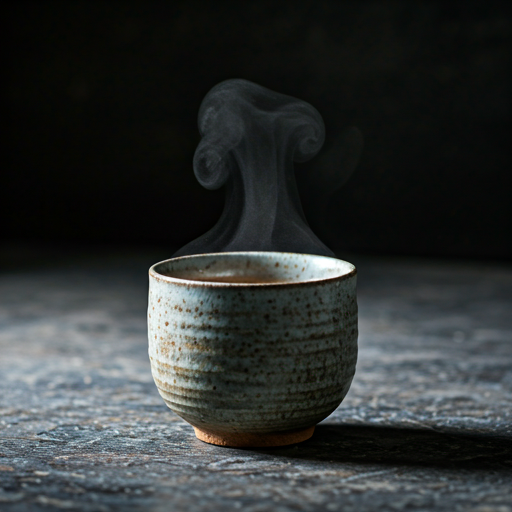
The Allure of Black Gold: A Cosmic Masterpiece in Your Hands
There is a profound moment of quietude when you first hold a traditional Jian Zhan tea bowl. Looking into its depths is akin to gazing into a star-filled night sky or the deep, dark expanse of the ocean. Known historically as "Black Gold," Jian Zhan (or Tenmoku, as it is celebrated in Japan) is not merely a vessel for drinking tea; it is an artifact of ancient alchemy, a symbol of royal prestige, and a physical manifestation of Zen philosophy.
For centuries, these iron-rich, dark-glazed bowls captivated the most powerful figures in East Asia. From the artistic and sophisticated emperors of China's Song Dynasty to the deeply spiritual Japanese tea masters who elevated tea drinking to an art form, Jian Zhan was the ultimate object of desire. But what exactly caused this intense historical obsession? How did a seemingly simple black bowl command the reverence of emperors and the wealth of shoguns? To understand the magic of this "Black Gold," we must travel back over a thousand years to the golden age of Chinese ceramics and the mist-shrouded mountains of Fujian province.

The Genesis of Jian Zhan: The Song Dynasty's Cultural Pinnacle
The Song Dynasty (960–1279 AD) is universally regarded by historians and art critics as the zenith of Chinese ceramic art. During this era, aesthetics shifted away from the ornate and heavily decorated styles of the preceding Tang Dynasty. Song aesthetics favored minimalism, elegance, monochrome glazes, and a profound appreciation for the natural world. It was in this fertile cultural landscape that Jian Zhan was born.
The Shift to Black Porcelain
Prior to the Song Dynasty, celadon (greenish-blue) and white porcelains dominated the kilns. However, a revolutionary shift in how tea was consumed drastically changed the demand for teaware. The Song Dynasty popularized the practice of Dian Cha (点茶), or whipped tea. In this preparation method, finely ground tea leaves were placed into a bowl, hot water was added, and the mixture was vigorously whisked using a bamboo whisk until a thick, frothy, snow-white foam formed on the surface.
To fully appreciate the pure white froth of the tea, a high-contrast background was essential. Celadon and white bowls caused the tea foam to visually wash out. Black-glazed bowls, however, provided the perfect, dramatic canvas. The dark, lustrous interior of a Jian Zhan bowl framed the white tea foam perfectly, allowing tea drinkers to evaluate the quality of the froth and the skill of the preparer.
Emperor Huizong's Royal Endorsement
The obsession with Jian Zhan reached the very top of the imperial hierarchy. Emperor Huizong (1082–1135), a ruler perhaps more famous for his artistic genius than his political acumen, was a fervent tea enthusiast. He authored the famous "Treatise on Tea" (Daguan Cha Lun), a comprehensive guide to tea appreciation, cultivation, and preparation.
In his treatise, Emperor Huizong explicitly stated his preference for Jian Zhan over all other ceramics. He wrote, "The color of the tea is white, so black tea bowls are the best. Bowls with hare's fur patterns are highly prized." When the Emperor of China declares a specific type of teaware to be the absolute pinnacle of refinement, the entire empire takes notice. Suddenly, every scholar, poet, and aristocrat sought to acquire these dark, mesmerizing bowls from the Jian kilns.
The Visual Alchemy: The Science Behind the "Black Gold"
The term "Black Gold" does not merely refer to the color of the bowls or their immense financial value; it is a nod to the metallic, lustrous sheen and the incredibly complex, unpredictable patterns that emerge from the kiln. The creation of Jian Zhan is a delicate dance between earth, fire, and highly specific chemical compositions.
The Iron-Rich Clay of Jianyang
Authentic Jian Zhan originates strictly from Jianyang in the northern part of Fujian Province. The local clay here is remarkably unique—it has an unusually high iron content, often exceeding 8%. This iron-heavy clay gives the unglazed foot of a Jian bowl a rough, dark, almost metallic appearance. When fired at extreme temperatures, this robust clay body allows the bowl to retain heat exceptionally well, keeping the whisked tea warm while ensuring the outside of the bowl is comfortable to hold.
The Magic of the Kiln: A Transformative Fire
The true magic, however, lies in the glaze. Like the clay, the glaze used in Jian Zhan is heavily laden with iron oxide and wood ash. When the bowls are placed into traditional dragon kilns (long, sloping, wood-fired kilns) and subjected to temperatures soaring above 1300°C (2370°F) in a reduction atmosphere (an oxygen-starved environment), remarkable chemical reactions occur.
The intense heat causes the iron in the glaze to melt, pool, and flow downward. As the kiln cools, the iron crystallizes, separating from the base glaze to form breathtaking, iridescent patterns. Because the wood fire is unpredictable—with fluctuating temperatures and shifting airflows—no two Jian Zhan bowls are ever identical. The kiln acts as a capricious artist, making every surviving bowl a one-of-a-kind masterpiece.

Hare's Fur, Oil Spot, and Yohen
Depending on the specific firing conditions, the crystallization of the iron results in distinct, highly prized patterns:
- Hare's Fur (Tu Hao): The most classic Jian Zhan pattern, characterized by fine, streaking lines that radiate from the center of the bowl to the rim. These streaks, which can be silver, gold, or rust-colored, closely resemble the delicate fur of a hare.
- Oil Spot (Di Shui): When the iron bubbles to the surface and bursts during firing, it leaves behind stunning, metallic, circular spots that resemble droplets of oil shimmering on water. These spots often reflect silver, blue, or gold light.
- Yohen (曜变): The holy grail of Jian Zhan. "Yohen" translates to "kiln transmutation." These extremely rare bowls feature oil spots surrounded by vibrant, iridescent halos of blue, green, and purple, resembling deep-space nebulas. Only three intact Yohen bowls from the Song Dynasty are known to exist today, all preserved as National Treasures in Japan.
The Journey to Japan: The Birth of Tenmoku
While the Song Dynasty eventually fell to the Mongols, plunging the production of Jian Zhan into a centuries-long decline in China, the legacy of the "Black Gold" was preserved, elevated, and immortalized across the sea in Japan.
Monks and the Mount Tianmu Connection
During the Southern Song Dynasty (1127–1279), Japanese Zen Buddhist monks frequently traveled to China to study at the great monasteries of Mount Tianmu (pronounced "Tenmoku" in Japanese) in Zhejiang Province. At these monasteries, the monks adopted the local custom of drinking whipped tea from black Jian bowls to stay awake during long hours of meditation.
When these monks returned to Japan, they brought the tea, the preparation methods, and the beautiful black bowls back with them. Because the Japanese monks associated these bowls with the sacred Mount Tianmu where they had studied, they began referring to the Jian Zhan bowls simply as "Tenmoku."
The Rise of the Japanese Tea Ceremony (Chanoyu)
In Japan, the consumption of matcha (the Japanese evolution of powdered tea) transitioned from a monastic ritual to an aristocratic pastime, eventually evolving into the highly formalized Japanese Tea Ceremony, or Chanoyu. During the Kamakura (1185–1333) and Muromachi (1336–1573) periods, owning Chinese ceramics—known as Karamono—was the ultimate symbol of wealth, power, and cultural refinement.
Why Japanese Tea Masters Revered Tenmoku
The Japanese obsession with Tenmoku went far beyond mere exoticism. The aesthetics of the Jian Zhan bowl perfectly aligned with the evolving philosophical underpinnings of Japanese culture.
The Philosophy of Wabi-Sabi
At the heart of traditional Japanese aesthetics is Wabi-Sabi, a philosophy that embraces transience, imperfection, and natural rusticity. Jian Zhan is the very embodiment of Wabi-Sabi. The thick, dripping glaze that stops just short of the unglazed, rough foot creates a beautiful contrast between the refined and the raw. The asymmetrical, unpredictable patterns born from the chaotic fire of the kiln mean that perfection is found in the bowl's unique imperfections.
The Visual Contrast
Much like the Song Dynasty emperors who loved the contrast of white foam on black glaze, Japanese tea masters recognized the breathtaking visual impact of pouring vibrant, emerald-green matcha into a deep, dark Tenmoku bowl. The dark glaze makes the green tea appear almost luminous, enhancing the sensory experience of the tea ceremony.
Status and Spiritual Depth
During the Muromachi period, powerful shoguns like Ashikaga Yoshimasa amassed massive collections of Tenmoku. These bowls were considered so valuable that they were often given as rewards to samurai for valor in battle, and some exceptional bowls were deemed equal in value to a castle or an entire province.
To the great tea masters, such as Sen no Rikyu, the deep, dark glaze of a Tenmoku bowl was a focal point for meditation. Gazing into the bowl was meant to empty the mind, drawing the drinker into a miniature cosmos where earthly worries dissolved into the vastness of the "Black Gold."
The Decline and Glorious Revival of Jian Zhan
Despite its monumental cultural significance, the production of Jian Zhan abruptly collapsed in China. During the Ming Dynasty (1368–1644), Emperor Hongwu decreed that tribute tea must be presented as loose leaves rather than compressed cakes, as the production of cakes heavily burdened the peasants. This decree killed the practice of Dian Cha (whisked tea) in China, and with it, the demand for black-glazed bowls. The kilns in Jianyang went cold, and the techniques for creating "Black Gold" were lost to time for hundreds of years.
The Modern Resurrection
It wasn't until the late 20th century that the lost art of Jian Zhan was finally resurrected. Spurred by archaeological excavations at the ancient kiln sites in Fujian, a new generation of Chinese ceramicists and scientists dedicated decades to reverse-engineering the ancient Song Dynasty recipes. Through relentless experimentation with local clay, ash glazes, and temperature control, modern artisans have successfully revived the "Black Gold."
Today, Jian Zhan is experiencing a global renaissance. Tea enthusiasts, art collectors, and spiritual seekers around the world are rediscovering the profound beauty of these teacups. Modern masters are not only replicating the classic Hare's Fur and Oil Spot patterns but are also pushing the boundaries of the craft, creating contemporary masterpieces that rival the ancient antiques.

Conclusion: A Legacy Cast in Clay and Fire
The obsession that Japanese tea masters and Song Dynasty emperors felt for this "Black Gold" is entirely understandable once you hold a Jian Zhan bowl in your own hands. It is a piece of art that resists mass production. It demands patience, embraces the chaos of nature, and offers a quiet, contemplative beauty that changes with every angle of light and every pour of tea.
To drink from a Tenmoku bowl is to participate in a ritual that spans over a millennium. It bridges the gap between the imperial courts of ancient China and the serene tea rooms of Kyoto. More than just a vessel, Jian Zhan is a testament to the enduring human desire to capture a little piece of the cosmos, freeze it in time, and cradle it in the palm of our hands.