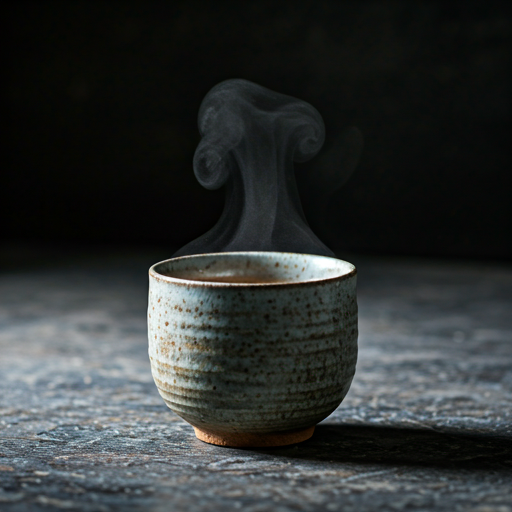
Imagine holding a small, heavy tea bowl in the palm of your hands. As you tilt it toward the light, the dark, almost black interior suddenly erupts into a dazzling display of iridescent colors. You might see streaks of silver that look like the soft fur of a wild hare, or metallic spots that resemble drops of oil floating on water, or perhaps even a mesmerizing halo of blue light that looks like a starry night sky. When people first encounter this breathtaking and unpredictable pottery, the immediate question they ask is: what is Tenmoku, and how can earth and fire create something so magical?
For anyone stepping into the refined world of traditional Asian tea culture, ceramics, or antique collecting, "Tenmoku" is a word whispered with deep reverence. Yet, because of its complex history that spans across empires and centuries, its true meaning is often misunderstood. It is a story of ancient Chinese imperial extravagance, perilous ocean voyages, Zen Buddhist monks, and a pottery technique so difficult that it was considered a lost art for hundreds of years.
In this comprehensive, expert-led guide, we will journey back over a thousand years to uncover the authentic roots of this ceramic masterpiece. We will answer precisely what Tenmoku pottery is, reveal the brutal and unforgiving kiln craftsmanship required to make it, and explain how a humble dark Chinese tea bowl crossed the sea to become a fiercely guarded National Treasure in Japan.
The Direct Answer: What is Tenmoku Pottery?
To provide a clear and definitive answer: Tenmoku (天目) is a highly revered style of dark, iron-glazed pottery that originated in China during the Song Dynasty (where it is authentically known as Jianzhan).
It is specifically characterized by its heavy, iron-rich clay body (often called the "iron tire"), its conical shape designed perfectly for whisking tea, and its thick, dark glazes. Unlike painted ceramics, the magnificent patterns on a Tenmoku bowl are not drawn by human hands. Instead, they are the result of natural iron oxides crystallizing on the surface of the glaze as the bowl cools down from blistering kiln temperatures exceeding 1300°C (2372°F). Today, the term is used globally to describe this magnificent dark-glaze aesthetic, but its soul remains deeply rooted in ancient Eastern tea traditions.
The Song Dynasty Origins: The Birth of Jianzhan
To truly understand the prestige of these dark bowls, we must look at the era in which they were born. The Song Dynasty (960–1279 AD) was a period of profound cultural and artistic flourishing in China. It was during this time that ceramics reached an unprecedented level of sophistication, moving away from garish colors toward minimalist, nature-inspired elegance.
The Iron-Rich Clay of Jianyang
The story begins in the lush, mountainous region of Jianyang, located in modern-day Fujian Province, China. Here, ancient artisans established a massive network of "dragon kilns" (long, sloping kilns built into the hillsides) known as the Jian Kilns. The secret to their success lay in the local earth. The clay in Jianyang is extraordinarily rich in iron ore. When fired at extreme temperatures in a reduction atmosphere (an environment starved of oxygen), this clay turns a dark, charcoal grey or almost black color, becoming incredibly dense and heavy.
This iron-rich body is crucial for two reasons. First, it provides a dramatic, dark canvas for the glaze to interact with. Second, the thick, heavy walls of the "iron tire" have exceptional thermal retention properties, keeping hot beverages warm for a significantly longer time than thin porcelain.
The Art of Whisked Tea (Dian Cha)
But why did the Song Dynasty elite, including the Emperor himself, obsess over dark, heavy bowls? The answer lies in the specific way tea was consumed at the time. The Song Dynasty did not steep loose tea leaves in teapots like we do today. Instead, they practiced Dian Cha (点茶).
In this luxurious ritual, highly prized tea cakes were ground into a fine micro-powder. This powder was placed into a bowl, hot water was added, and the mixture was vigorously whipped with a bamboo whisk until a thick, frothy, snow-white foam formed on the surface. During high-stakes tea-tasting competitions, judges evaluated the quality of the tea based on the purity and longevity of this white froth.
Emperor Huizong, a passionate tea connoisseur and artist, famously wrote in his "Treatise on Tea" that the dark, bluish-black glaze of a Jian tea bowl was the absolute superior vessel for this practice. The dark background provided the perfect, striking visual contrast to the pristine white tea foam, making it easier to judge the tea's quality. Thus, the Jianzhan became the most coveted tea accessory in the empire.
The Journey to Japan: How It Became "Tenmoku"
If these iron-glazed bowls were invented in Fujian, China, and originally called Jianzhan, how did the word "Tenmoku" enter the global lexicon? The answer involves a massive cultural exchange driven by religion, philosophy, and the perilous East China Sea.
Zen Monks at Mount Tianmu
During the Kamakura period (1185–1333 AD) in Japan, dedicated Japanese Zen Buddhist monks traveled to China to study religion and philosophy. Many of these devoted scholars lived and studied at the historic Buddhist temples nestled on the peaks of Mount Tianmu (天目山) in Zhejiang Province.
In these serene Chinese temples, the monks participated in daily tea rituals. They drank whisked powdered tea from the dark, heavy Jianzhan bowls to help them stay awake and focused during grueling, hours-long meditation sessions. The aesthetic of the bowls—dark, understated, heavy, and deeply connected to earth and fire—resonated perfectly with the Zen philosophy of Wabi-Sabi (finding beauty in imperfection and impermanence).
A Linguistic Shift
When these monks eventually returned to Japan, they brought the local tea-drinking practices, the tea seeds, and the magnificent dark tea bowls with them. When the Japanese aristocracy and samurai class saw these mesmerizing ceramics and asked where they came from, the monks naturally answered that they brought them from the temples of Mount Tianmu.
In the Japanese language, the Chinese characters for Mount Tianmu (天目) are pronounced as "Tenmoku." Over time, the name of the geographical location where the monks studied became the permanent, adopted name for the pottery itself. From that point forward, these dark-glazed bowls were known in Japan—and eventually the Western world—as Tenmoku.
Japanese National Treasures
As the Japanese tea ceremony (Chado) formalized and evolved, Tenmoku bowls were elevated to the highest possible status. Tea masters treasured them beyond measure. While the art of making these bowls was tragically lost in China for centuries due to changes in tea-drinking habits (moving from whisked powder to steeped leaves during the Ming Dynasty), Japan meticulously preserved the finest examples imported during the Song Dynasty.
Today, the absolute highest grade of these ancient bowls—the miraculous Yohen Tenmoku—are so rare that only a handful exist in the world, and all are safely kept in Japanese museums, officially designated as Japanese National Treasures. They are considered priceless artifacts of human history.
The Magic of the Glaze: 3 Classic Tenmoku Patterns
What truly separates authentic Tenmoku from ordinary pottery is the sheer unpredictability of the kiln. The patterns cannot be painted; they must be born from the fire. As the iron-rich glaze melts at 1300°C and then rapidly cools, iron oxides separate and form distinct three-dimensional crystals. If you want to know how to identify fake Tenmoku, understanding these three natural patterns is essential.
1. Hare's Fur (兔毫 - Tu Hao)
This is the most iconic and classic pattern. During the firing process, the thick glaze boils and runs down the sides of the conical bowl. As it flows, the iron crystals stretch out into long, delicate, streaky lines that closely resemble the soft, fine fur of a wild hare. These streaks can range in color from silver and gold to deep rust and blue. Holding a Hare's Fur Tenmoku bowl is like holding a piece of frozen, cascading liquid.
2. Oil Spot (油滴 - You Di)
More difficult to achieve than Hare's Fur, the Oil Spot pattern occurs when iron oxide bubbles burst on the surface of the glaze but do not flow downwards. This leaves behind distinct, circular, metallic spots that look like shimmering droplets of oil suspended on the surface of dark water. A high-quality Oil Spot Jianzhan will reflect light brilliantly, showing off silvery-blue or golden dots that have a distinct, tactile 3D texture when you gently run your finger over them.
3. Yohen (曜变 - Starry Night / Changed by Fire)
Yohen is the holy grail of Tenmoku pottery. The word roughly translates to "changed by the fire" or "luminescence." This mythical pattern features irregular, dark spots surrounded by dazzling, iridescent halos of blue, green, and purple light that shift color depending on the angle of view. It looks exactly like looking into a deep, infinite galaxy. The original Song Dynasty technique for creating true Yohen is still heavily debated by modern ceramicists, making Yohen Tenmoku reproductions some of the most sought-after and expensive pieces in the modern market.
Why is the Tenmoku Tea Bowl Still Revered Today?
In our modern, fast-paced world, why do tea lovers and collectors still obsess over a ceramic technique invented over a millennium ago? The answer goes beyond simple historical curiosity; it is about the tangible, sensory experience of the tea ritual.
First, there is the functional benefit. The raw iron tire clay used in authentic Jianzhan is naturally porous at a microscopic level. Tea masters swear that the iron-rich walls actually interact with the water, softening it and reducing the bitter tannins in strong teas like Matcha, roasted Oolong, or aged Pu'er. Furthermore, the heavy walls provide incredible heat retention, allowing the tea to stay at its optimal flavor temperature for much longer.
Second, it is about mindfulness and connection. No two genuine Tenmoku cups are ever exactly alike. Because the crystallization process is dictated by nature and fire, each cup is a one-of-a-kind masterpiece. When you cradle a handmade iron-glazed bowl, feel its substantial weight, and gaze into its galaxy-like glaze, you are forced to slow down. You are connecting with a millennium of history, Zen philosophy, and the raw power of the earth.
If you are ready to elevate your daily tea ritual and experience the profound beauty of Song Dynasty craftsmanship for yourself, we invite you to explore our carefully curated collections at TenmokuCup.com. We partner directly with master artisans who have dedicated their lives to reviving the authentic, high-temperature reduction firing techniques of the ancient Jian Kilns.
Frequently Asked Questions About Tenmoku Pottery
What is Tenmoku glaze made of?
Authentic Tenmoku glaze is remarkably simple in its ingredients but incredibly complex in its execution. It is made primarily from two natural elements: the local iron-rich clay (the same mud used for the body of the cup) and natural plant ash (often pine wood ash), which acts as a flux to help the glaze melt. There are no artificial chemical dyes or heavy metal paints used in genuine, traditional pieces. The stunning colors and patterns are purely the result of iron oxides crystallizing at extreme temperatures, making the cups 100% food-safe.
Is Tenmoku the same as Jianzhan?
Yes, historically and physically, they are the exact same type of pottery. "Jianzhan" is the original Chinese name, denoting the bowls made in the Jian Kilns of Fujian, China during the Song Dynasty. "Tenmoku" is simply the Japanese pronunciation of Mount Tianmu (a mountain in China where Japanese monks first discovered these bowls). While "Jianzhan" usually refers to the authentic, geographically specific Chinese craft, "Tenmoku" has become a broader, global term used by potters worldwide to describe this dark, iron-glazed style.
Why are authentic Tenmoku cups so expensive?
The high cost is entirely due to the brutal difficulty of the firing process. Traditional potters say "one color enters the kiln, ten thousand colors come out." Because the spectacular crystalline patterns rely on volatile chemical reactions at temperatures over 1300°C, the failure rate is staggering. Often, a kiln firing will result in warped, stuck, or dull pieces, with only a tiny percentage (sometimes less than 5%) emerging as flawless, museum-quality masterpieces. You are paying for the artisan's immense skill, the high rate of lost materials, and the sheer rarity of a perfect natural pattern.